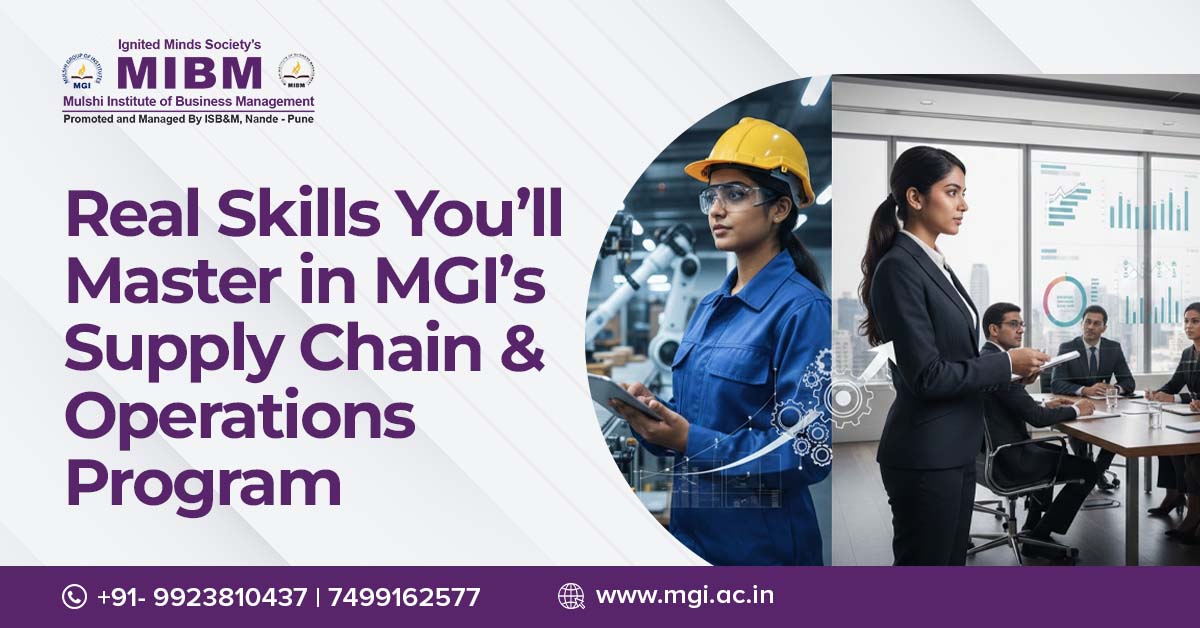
Supply chains are no longer back-end functions quietly supporting businesses. Supply chain and operations experts now play a vital role in making important business choices that affect profits, customer happiness, and how people see a brand. These professionals are key in dealing with everything from worldwide problems to getting deliveries done in a single day.
MGI's Supply Chain & Operations Management program gets students ready for what's happening now. Instead of just teaching how to handle tasks separately, it gets students ready to manage complicated systems, lower expenses, guide groups, and have a say in important decisions.
Let's examine how this course switches students from simply learning about operations on the production line to turning them into leaders who make smart choices.
Why Knowing About Supply Chain & Operations Is Super Important
Modern supply chains make up a big part of what businesses spend, like 80–90% for many companies around the world.
That’s why businesses are really trying to find people who get how to:
- Integrate the whole supply chain from start to finish
- Lower costs and make operations top-notch
- Risk management and global sourcing
- Data-driven operational decision-making
MGI’s PGDM in Supply Chain & Operations Management is designed with these pressures in mind.
A Dual Specialisation That Maximises Career Flexibility
One of the program’s strongest advantages is its dual specialization structure, allowing students to develop cross-functional thinking. This imitates how actual companies work, where departments collaborate.
Skill 1: Complete Operations Management
It begins with Operations Management I and II. Students learn to produce, deliver, and scale services and goods in a practical way.
Students learn to:
- Design efficient production systems
- Balance capacity, demand, and resources
- Improve productivity without compromising quality
Skill 2: Quantitative Decision-Making for Operations
Numbers drive operational choices. Quantitative Techniques I & II teach students to depend on data analysis, not just gut feelings.
Key skills include:
- Forecasting demand and capacity needs
- Optimising costs using mathematical models
- Applying statistical tools to real operational problems
This kind of detailed thinking gets students ready for jobs where their choices impact big budgets.
Skill 3: Supply Chain Design and Integration
Students in Supply Chain Management learn how all the parts—suppliers, manufacturers, warehouses, and distributors—work together smoothly.
They develop expertise in:
- Network design and supplier selection
- Keeping materials and info moving smoothly.
- Making sure the supply chain fits the company's plans.
Skill 4: Handling Projects and Processes
Operations bosses are always doing projects—like growing, updating systems, and making things better. Knowing project management helps students get things done on time and without spending too much.
Students learn:
- Project planning and execution frameworks
- Identifying and reducing risks.
- Working with different teams and managing stakeholders.
- These skills are key for leaders in every field.
Skill 5: Supply Chain Analytics and Tech
Today, data drives supply chains. Courses like Supply Chain Analytics I & II teach students to turn data into useful information.
Students work on:
- Demand forecasting models
- Inventory optimisation techniques
- Performance dashboards and KPIs
Skill 6: Inventory, Warehousing, and Logistics Expertise
In Inventory & Warehousing Management and Logistics & Distribution Management, students learn how to move products well.
The courses teach how to:
- Lower inventory costs.
- Plan warehouse layouts.
- Make transportation and delivery better.
Skill 7: Supplier and Vendor Relations
Good supply chains need good partnerships. Purchasing and Vendor Management teaches students how to handle suppliers.
The courses cover:
Vendor assessment and negotiation.
Contract handling.
Cost control while keeping quality high.
Skill 8: Quality and Continuous Improvement
Through Total Quality Management and Competing Through Operations Excellence, students learn how groups get operational excellence.
They study:
- Lean and Six Sigma ideas.
- Ways to improve processes.
- Operational standards.
Skill 9: Supply Chain Finance and Risk Management
Because operations decisions influence cash flow, supply chain finance connects finance and operations.
Students will learn about:
- Working capital improvement
- Cost-to-serve analysis
- How supply chain decisions affect finances
Skill 10: Global Perspective and Entrepreneurial Thinking
Today's supply chains are global. Global Supply Chain Management gets students ready for international sourcing, logistics, and compliance issues.
Entrepreneurship helps students:
- Create operations that can grow
- Think creatively about process design
- Start or run operations-focused businesses
Current Supply Chain Trends & Data: Why This Program Is Timely
Today, knowing about supply chains is more important than ever.
McKinsey & Company says that companies with strong, tech-supported supply chains bounce back from problems three times quicker than others. Because of this, businesses are putting lots of money into data analysis, ERP systems, and experts who can handle risks.
The World Economic Forum says that having strong and green supply chains, along with using new tech, are now top issues for company boards, not just things to think about later.
In India, NASSCOM says that jobs in logistics and supply chains are growing fast in management. This is because of online shopping growth, investments in infrastructure, and changes in global manufacturing.
Also, Deloitte's studies about operations workers show that people who are good at operations, data analysis, and leadership get paid 20–25% more than those with just a basic operations degree.
MGI’s courses, which mix operations, data analysis, ERP, and leadership, fit well with what's really happening in the business world.
Placement Outcomes That Reflect Industry Demand
- MGI’s results speak for themselves:
- 100% placement record
- 160+ companies visiting campus consistently
- Highest CTC: INR 17,00,000
- Average CTC: INR 8,80,000
Careers After PGDM in Supply Chain & Operations: Roles & Salary Growth
Graduates of MGI's supply chain program are well-prepared to move up in their careers across a range of industries. Here’s what you can usually expect in terms of job titles and salaries as you get more experience.
|
Job Role |
Entry-Level (0–2 Years) |
Mid-Level (3–6 Years) |
Senior-Level (7–12+ Years) |
|
Supply Chain Analyst |
₹5–7 LPA |
₹10–14 LPA |
₹18–25+ LPA |
|
Operations Manager |
₹6–8 LPA |
₹12–18 LPA |
₹25–40+ LPA |
|
Logistics & Distribution Head |
₹6–9 LPA |
₹15–22 LPA |
₹30–45+ LPA |
|
Procurement & Vendor Manager |
₹5–7.5 LPA |
₹12–17 LPA |
₹22–35+ LPA |
|
ERP & Process Consultant |
₹6–9 LPA |
₹14–20 LPA |
₹28–50+ LPA |
|
Operations Strategy Professional |
₹7–10 LPA |
₹18–25 LPA |
₹35–60+ LPA |
What Drives Faster Salary Growth in These Roles?
Graduates who accelerate fastest typically bring:
Strong analytics and ERP expertise
Exposure to global supply chains
Proven cost optimisation and process improvement outcomes
Leadership and cross-functional coordination skills
This is exactly where MGI’s application-driven curriculum gives students a long-term advantage—helping them move beyond execution roles into strategic and leadership positions.
Final Takeaway: Operations Leaders, Not Just Managers
MGI's PGDM in Supply Chain & Operations Management teaches students to design systems, lead teams, control costs, and have a strategic output, rather than just manage processes.
This curriculum at MGI prepares students for a successful career in supply chain and operations management, from the factory floor to the boardroom.
FAQ :
What Skills Will Students Gain in the PGDM Supply Chain & Operations Program?
Students will gain practical experience managing a company's supply chain through operations, using analytics to support decisions and create a supply chain plan, sourcing materials, and distributing goods, as well as developing an understanding of Enterprise Resource Planning (ERP) and its applications in supply chain management.
Is Supply Chain Management an Upcoming Career Path for Students in India?
Yes, the career opportunities available within supply chain management are rapidly growing in India due to the increasing impact of e-commerce and globalization on the management of production and logistics.
Can the PGDM Program Help Students Gain Real-World Experience?
Yes! The program is designed to give students the opportunity to gain hands-on experience in supply chain and operations through exposure to case studies, access to ERP systems, internships, and networking.
What is the job placement rate for this program?
The PGDM Supply Chain and Operations Program has a 100% job placement rate and provides graduates with competitive average salaries and excellent starting salary packages.
Will a PGDM in Supply Chain and Operations Help Me Become a Leader?
Yes! This program provides graduates with the skills to analyze data and plan and lead by teaching graduates how to take the initiative, develop effective plans, and lead organizations successfully.