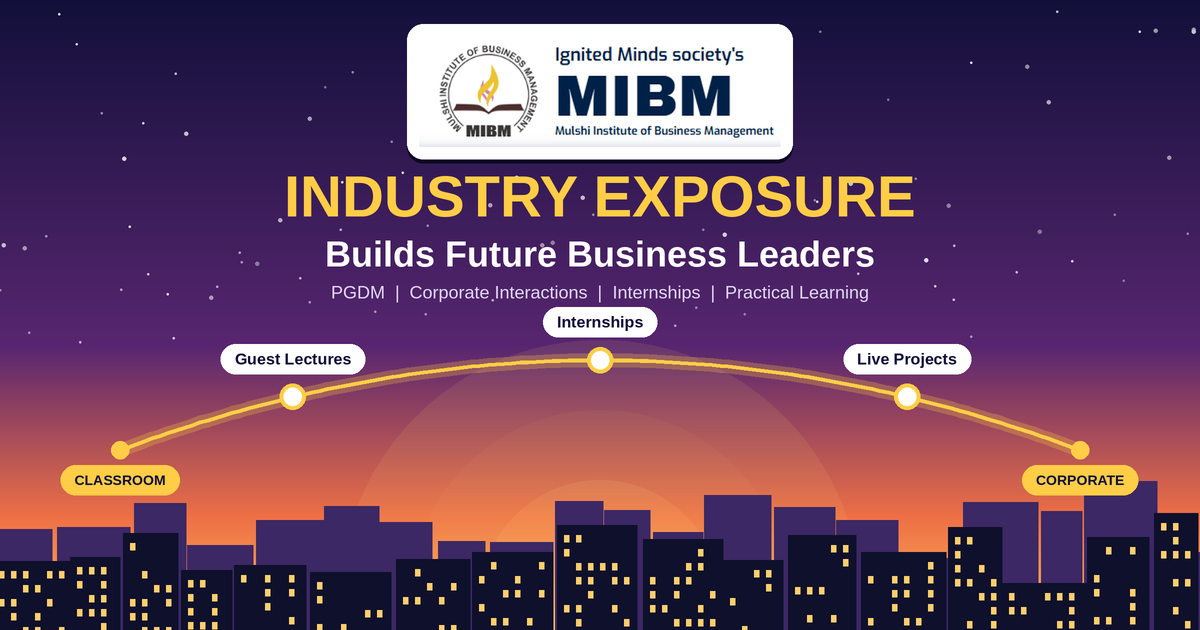
Management education is not limited to textbooks, classroom discussions and academic examinations. In today's competitive business environment, students need practical knowledge, professional confidence and an understanding of how organizations operate. This is where industry exposure becomes an important part of a PGDM programme.
Students pursuing management education often have theoretical knowledge of marketing, finance, human resources and business operations. However, applying these concepts in actual business situations requires experience and practical understanding. Industry exposure helps bridge this gap by introducing students to real corporate environments.
Understanding Real Business Operations
Every organization operates through different departments, including marketing, finance, human resources, operations and administration. Industry interactions help students understand how these departments work together to achieve business objectives.
For example, marketing students can learn how brands identify customer requirements, develop promotional campaigns and measure campaign performance. Finance students can understand budgeting, financial planning and investment decisions. Similarly, HR students can explore recruitment processes, employee engagement and organizational development.
This practical understanding makes management concepts easier to apply in professional situations.
Importance of Corporate Interactions
Corporate interactions allow students to learn directly from experienced professionals. Guest lectures, seminars, industry discussions and expert sessions provide insights into current business practices.
Professionals can share their experiences about workplace challenges, leadership responsibilities and changing industry expectations. Students also get opportunities to ask questions and understand the skills required to build successful careers.
Such interactions help students develop a broader understanding of the corporate world.
Internships and Practical Learning
Internships are among the most valuable components of management education. They allow students to work on assignments, understand organizational processes and experience professional responsibilities.
During an internship, students may participate in market research, financial analysis, recruitment activities, sales operations or business development projects. These experiences help them connect classroom learning with actual workplace requirements.
MGI highlights summer internships and corporate exposure as important components of its management education approach.
Developing Professional Skills
Industry exposure also contributes to the development of essential professional skills. Communication, teamwork, leadership, analytical thinking and problem-solving are important in almost every management role.
Working with different teams helps students understand professional responsibilities and improve their ability to collaborate. Presentations and business projects also develop confidence and decision-making abilities.
Preparing for Changing Business Requirements
Industries continuously evolve because of technology, changing customer behaviour and global competition. Students need to understand these developments before entering the professional world.
Industry-oriented learning helps future managers become familiar with emerging business practices and prepare for changing workplace expectations.
Conclusion
Industry exposure plays an important role in preparing management students for professional responsibilities. By combining academic learning with corporate interactions, internships and practical projects, PGDM programmes can help students develop a balanced understanding of business management.
Students exploring management education at MGI can learn more about its PGDM programmes, specialization options and industry-oriented learning approach through the official website.